Smugglers Worldwide

Pages

Search This Blog

DISCLAIMER
Text may be subject to copyright.This blog does not claim copyright to any such text. Copyright remains with the original copyright holder

Sunday, 17 August 2014

Ebola Alert In Alicante After Man Taken Ill

An ebola alert has been activated in Alicante, Spain, after a young Nigerian man was admitted to hospital with fever and vomiting. Spanish health authorities activated alert protocols after the man showed "several symptoms" of the disease.

The alert comes a week after a Spanish priest who contracted ebola while working in Liberia died in hospital in Madrid. The man was taken ill in the eastern city of Alicante Father Miguel Pajares was the first European infected by a strain of the virus that has killed more than 1,000 people in West Africa.

He was airlifted from Liberia to Spain on August 7 after becoming infected while working for a non-governmental organisation there. The 75-year-old was flown to Europe for treatment with his co-worker Juliana Bohi, a nun who has since tested negative for the disease. Elsewhere, 17 ebola sufferers have fled a Liberian clinic raided by looters who stole blood-stained sheets - sparking fears the virus will spread.

Saturday, 16 August 2014

ISIS terrorists discovered in Morocco

MOROCCAN anti-terror services working in collaboration with Spanish police officers have broken up a jihadist terror cell in Morocco. In total nine members of the cell, reported to be linked to the Islamic State of Iraq and Syria (ISIS), were detained on Thursday in the three Moroccan cities of Fes, Tetouan and Fnideq. The terrorists were working to recruit new members to the cell with the objective of sending them off to fight in the conflicts currently underway in Syria and Iraq.

It is believed that some of the group made frequent visits to the Spanish city of Ceuta, located on the north coast of Morocco, with the intention of converting people to their cause and raising financial aid. The Spanish Interior Minister has linked those arrested with ISIS, and confirmed that they had received training in the use of weapons and the manufacture of explosives with the goal of participating in suicide attacks or travelling to conflict zones in the Middle-East.

It has also come to light that there were plans to carry out a terror attack on Moroccan soil. Computers and other data-storage devices used by the jihadists are currently being examined for evidence of concrete plans. The investigation remains open within the three cities, with police from both nationalities continuing to work together. Government sources commented that the operation reflects on the excellent relationship that exists between Spain and Morocco when combating terror in the region.

Luggage thieves caught at airport

THE Guardia Civil have arrested two people under suspicion of stealing suitcases from distracted airport passengers. Within the Guardia Civil brief of the Safer Tourism Plan which has been put in place to prevent theft from tourists visiting Malaga, the officers at the airport have caught two people who were taking national flights with only hand baggage and then taking advantage of distracted tourists arriving at the baggage carousels to steal their luggage while they were looking away. On several occasions they also, allegedly, pick-pocketed passengers as well as taking their hand baggage while they were retrieving their check in luggage. Investigating officers calculate that they have stolen around €21,000 worth of luggage and wallets.

Former boxing champ shot in Marbella to be released from hospital

FORMER boxing champion Jamie Moore, who was shot in Marbella, is to be released from hospital today. The 35-year-old, from Walkden, was shot in the leg and hip while in the Spanish town, where he was training Birmingham middleweight Matthew Macklin. Mr Moore, a former European light-middleweight champion, did not suffer permanent damage in the attack and was transferred to his local hospital at Salford Royal.

Tweeting about his release from hospital, Mr Moore said: “Being discharged from hospital today, still a way to go before I’m back 100 per cent but I’m making quick progress.” He added: “Big thanks to the doctors and nurses at Salford Royal who’ve looked after me over the last four days, they’ve been absolutely brilliant.”

Friday, 15 August 2014

Ebola outbreak vastly underestimated

The death toll from the world's worst outbreak of Ebola stood on Wednesday at 1,069 from 1,975 confirmed, probable and suspected cases, the agency said. The majority were in Guinea, Sierra Leone and Liberia, while four people have died in Nigeria. The agency's apparent acknowledgement the situation is worse than previously thought could spur governments and aid organisations to take stronger measures against the virus. "Staff at the outbreak sites see evidence that the numbers of reported cases and deaths vastly underestimate the magnitude of the outbreak," the organisation said. "WHO is coordinating a massive scaling up of the international response, marshalling support from individual countries, disease control agencies, agencies within the United Nations system, and others." International agencies are looking into emergency food drops and truck convoys to reach hungry people in Liberia and Sierra Leone cordoned off from the outside world to halt the spread of the virus, a top World Bank official said. In the latest sign of action by West African governments, Guinea has declared a public health emergency and is sending health workers to all affected border points, an official said. An estimated 377 people have died in Guinea since the outbreak began in March in remote parts of a border region near Sierra Leone and Liberia. Guinea says its outbreak is under control with the numbers of new cases falling, but the measures are needed to prevent new infections from neighbouring countries.

"Trucks full of health materials and carrying health personnel are going to all the border points with Liberia and Sierra Leone," Aboubacar Sidiki Diakit president of Guinea's Ebola commission, said late on Wednesday. As many as 3,000 people are waiting at 17 border points for a green light to enter the country, he said. "Any people who are sick will be immediately isolated. People will be followed up on. We can't take the risk of letting everyone through without checks."

Arrested for allegedly throwing two suitcases of cocaine out of a hotel window

Poice have established that a 39-year-old Irish man who was arrested in Spain after allegedly throwing two suitcases of cocaine out of a hotel window is a criminal who was previously targeted here in a proceeds-of-crime case. The suspect, who remains in custody in Valencia, has been named as Philip Grendon from Greenfort Drive, Clondalkin, and also with an address at Spiddal Road, Ballyfermot. Grendon's brother, Brian, is a member of a major west Dublin drugs gang who have been constant targets of gardai for 15 years. Already this year, officers based in Ballyfermot have been involved in the seizure of more than €1m worth of drugs from this crew who are considered one of the most organised and longest-established in the country.

The bizarre incident for which Grendon was arrested in Valencia happened last Friday just before 10pm at the four-star Tryp Valencia Oceanic Hotel. Police are said to be working on the theory that the alleged drugs trafficker, who had checked into the hotel a few hours earlier, confused noise from other guests entering and leaving their rooms with a rival gang trying to steal his drugs after suffering a paranoia attack. It is alleged that Grendon also removed ceiling tiles in his room, along with an air vent in an apparent attempt to hide the stash.

The 55kg of cocaine in the cases would have an estimated street value of more than €3.8m in Ireland. Sources who know Grendon say they are "surprised" that he would be trusted by a gang to be in charge of such a huge drugs haul. "Philip was always known to be a paranoid individual, but if what the Spanish police are saying is true, this is taking paranoia to a whole new level," a senior source said. Grendon's younger brother is convicted heroin dealer Brian Grendon (37), who was jailed for six years in December 2002 after he was busted with almost €2m worth of heroin in Palmerstown, west Dublin, the year before. shootings Brian Grendon was previously described in court by a senior detective as being linked to a gang who had in the past "used fatal shootings of anyone who compromised their business".

Philip Grendon appeared in court in Dublin in February 2012 when gardai prosecuted him under proceeds of crime legislation. Some of his associates were targeted by gardai as part of Operation Jumbo in 2002. They included murder victim David McCreevy (23), who was shot dead in Tallaght in 2002.

Wednesday, 13 August 2014

Spain to probe cigarette smuggling Crime.


EU's anti-fraud office on Monday urged Gibraltar and Spain to launch legal action after it found signs that organised crime was behind a rise in cigarette smuggling in southern Spain, AFP reports. The European Anti-Fraud Office (OLAF) made the recommendation after completing a probe it launched in August 2013 at the request of Madrid into a sharp rise in cigarette smuggling across the border between Gibraltar and Spain between 2009 and 2013. "The OLAF investigation has raised a number of concerns regarding the link between a significant increase in the size of the Gibraltar market for cigarettes over the past four years and the subsequent increase of cigarette smuggling across the frontier," a spokesman for the anti-fraud office said. "The concerns include indications of the involvement of organised crime," it added. "The OLAF final case report, and recommendations to initiate judicial proceedings related to the findings of the report, have been sent to the Spanish General State Prosecutor and to the Gibraltar Attorney General." Widespread cigarette smuggling between the tiny, low-tax British territory of Gibraltar to Spain is a major irritant in their frayed diplomatic relations. Smugglers buy the cigarettes in large volumes in Gibraltar at a price much lower than is charged in Spain, where the government in 2012 increased the sales tax to help plug a gaping public deficit. Spain in August introduced stringent border checks at its border with Gibraltar, leading to lengthy queues for motorists, in what it said was a move aimed at clamping down on cigarette smuggling.
But Gibraltar argues the stepped-up border controls are in retaliation for the installation of an artificial reef in its waters that has prevented Spanish boats from fishing there. Gibraltar Chief Minister Fabian Picardo welcomed the anti-fraud office report and said the territory wanted to work together with Spain to investigate the cigarette smuggling. "We wish any necessary investigations in this and in all areas to be carried out jointly between the competent Spanish and Gibraltar authorities in a genuine spirit of cooperation," he said. The government of Gibraltar said cigarette smuggling was already being brought under control thanks to the "draconian" measures it introduced in January. These include the introduction of searches of vehicles crossing into Spain and giving customs and police officers greater powers to fight smuggling. The Spanish government meanwhile said the anti-fraud office's report "justified" its "work in the fight against fraud and the underground economy". Spain ceded Gibraltar to Britain in 1713 but has long argued that it should be returned to Spanish sovereignty. London says it will not do so against the wishes of Gibraltarians, who are staunchly pro-British.

First Spaniard dies of Ebola

confirmed by the Madrid's health department that a 75-year-old Spanish priest, Miguel Pajares has died in Madrid’s Carlos III hospital from Ebola. The Spanish priest who was recently repatriated from Liberia, Africa last Thursday had been in isolation in Saint John of God hospital in the capital of Monrovia. It is known that he contracted the Ebola virus from the Director of the Hospital after a visit. The director is also known to have died. Miguel Pajares was being treated with an experimental drug ZMapp which is designed to fight the deadly virus, but failed to respond to the medication.

The drug ZMapp is a treatment that is made by a private US company and is still in intensely early stages and had previously been only tested on monkeys. In a statement the health ministry said that the drug arrived to the hospital late on Saturday evening to treat the 75-year-old. The drug ZMapp though in very early stages, was only allowed by the Spanish drug safety agency under “exceptional importation” to be used in the use of a non-authorised medication because of an incident where a patient’s life is in danger.

Expats could be forced to return home under new government tax proposals affecting rental property in the UK.

  The plans, forwarded by the Chancellor George Osborne, would see the removal of personal tax allowance privileges for overseas residents who also claim income in the UK. If the Chancellor goes ahead with the plans, couples drawing a government pension could also face a £4,000 (€5.000) cut in their yearly income, forcing many to return home. UK government pension plans are only taxable in Britain, meaning that former civil servants living abroad could see a rise in their tax obligations.

Under the current system, expatriates and EU nationals have UK-earned income offset with a personal tax allowance of £10,000 (€12.570), but the planned reforms could jeopardise those expats who live under a carefully considered budget. Up to 400,000 expats could be affected by the proposals which would inject the treasury with an extra £400 million (€503 million) a year.

Threat of EBOLA as 224 african immigrants rescued off Spanish coast

Maritime rescue vessels picked up a total of 224 people from 23 dinghies in the Strait of Gibraltar on Monday morning.  Both men and women, believed to all be Sub-Saharan Africans, are reported to be in a good state of health. They are currently being moved to Tarifa where they will be attended to by Red Cross volunteers.

Thursday, 7 August 2014

Spain: INTERPOL Targets Trafficking Of Stolen Vehicles

In an INTERPOL-supported operation in Spain targeting the trafficking of stolen vehicles, nearly 20 vehicles were recovered and some 15 individuals arrested. Led by the Spanish National Police, Operation Paso del Estrecho (which means ‘crossing the straits’), was conducted from 28 July to 1 August at the port of Algeciras in southern Spain, a known route used by organised criminal networks to smuggle cars stolen from throughout Europe into North Africa.

With the assistance of INTERPOL’s Stolen Motor Vehicles (SMV) unit, police monitored car ferries leaving the port en route to Morocco, with some 5,000 vehicles screened against INTERPOL’s SMV database. INTERPOL coordinated the deployment of 28 experts from seven countries to support the operation. The experts are members of the INTERPOL Stolen Motor Vehicles (SMV) Task Force, comprising police and private investigators who support member countries with operations targeting the theft and trafficking of motor vehicles. The INTERPOL SMV database contains more than 7 million records submitted by 128 member countries. In 2013, countries searched the database more than 125 million times, resulting in 117,000 positive hits. “Operation Paso del Estrecho was very important because it allowed us not only to detect and recover stolen vehicles from Spain and other European countries, but also to obtain crucial information that will allow us to continue our investigations into the organized crime groups dedicated to illegal vehicle trafficking,” said Ángel Arroyo Morales, Head of the vehicle crime investigation unit of the Spanish National Police Central Squad of Organized Crime. “There is no doubt that with strong cooperation between INTERPOL and police across Europe and beyond, we will continue to recover even more stolen vehicles before they can be used for criminal purposes,” he concluded. In addition, 15 people were arrested during the operation, including one Ukrainian and two Spanish nationals arrested in connection with a major investigation of the Central Squad of Organized Crime of the Spanish National Police.

They are suspected of being the masterminds behind a vast trafficking ring transporting stolen luxury cars between Spain and Ukraine, via Poland and Moldova. The stolen vehicles seized came from various European countries including Belgium, France, Germany, Italy, the Netherlands and Sweden, demonstrating the transnational character of this crime. “The trafficking of stolen vehicles is a crime that knows no borders. The only way to effectively combat the organized criminal networks behind this crime is therefore through coordinated joint actions, as evidenced by this successful operation,” said INTERPOL’s Director of Specialized Crime and Analysis, Glyn Lewis. Operation Paso del Estrecho is an annual initiative conducted by Spanish police in Algeciras – a major gateway between Europe and Africa which sees approximately 4.8 million people and 1.3 million vehicles pass through each year – to prevent stolen vehicles from leaving the country and to identify and disrupt the criminal groups responsible for the illicit trafficking. Highlighting the links between organized crime and the trafficking of stolen motor vehicles – which are often used in the commission of other serious crimes – is a key part of INTERPOL’s global Turn Back Crime campaign. The campaign aims to raise awareness of these hidden links, and of the very real effect these crimes can have on people’s daily lives.

Wednesday, 6 August 2014

Major crime gang link as Matthew Macklin’s coach survives assassination attempt

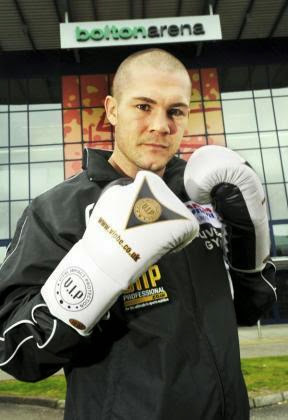
Former European boxing champion Jamie Moore is under armed police guard in a Spanish hospital after he was shot in the legs in Marbella at the weekend. 

Moore is currently based in Spain with his wife and two children where he is training Irish boxer Matthew Macklin at the MGM gym in Puerto Banus ahead of his upcoming fight in the National Stadium on August 30. Moore was shot in both legs and the foot when the gunman targeted him after he left a party on Saturday night but his injuries are not believed to be life-threatening. “Just to let everyone know Jamie Moore is still in hospital but he should be ok,” Macklin tweeted last night. “He was shot in his legs but the doctors have said there shouldn’t be any serious or permanent damage done.”

The coach and well-respected Sky Sports pundit who has no involvement in crime agreed to become Macklin’s coach last year, but gardai sources have indicated that “special surveillance plans” are in place for the upcoming fight. The villa where Moore was shot is owned by boxing manager Daniel Kinahan, a key member of the Christy Kinahan crime syndicate which operates a sizeable crime operation on Spain’s infamous Costa del Crime. Nicknamed the ‘Tipperary Tornado’, Birmingham-born Macklin has no involvement in crime but has been photographed in the company of major gangsters Gary Hutch and Daniekl Kinahan at major events.

Monday, 4 August 2014

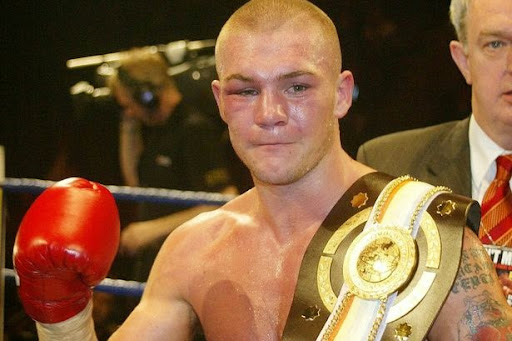
Former British and European champion boxer Jamie Moore has been shot in Marbella

Former British and European champion boxer Jamie Moore has been shot in Marbella - apparently in both legs.

Moore, the former European light-middleweight champion, was in Spain working at a gym owned by boxer, Matthew Macklin, who he is training.

It is understood the 35-year-old Moore, from Walkden, Greater Manchester, has now left hospital after treatment.

Moore, highly regarded in the sport, was on the verge of a WBC title shot, in 2009, but decided to quit the sport in 2010 on medical grounds.

Moore is a former two-time British light-middleweight champion and Commonwealth champion.

A source told the Manchester Evening News: "It would appear he was out and about, not at the gym, when he was shot."

A spokesman for the Foreign Office confirmed that a British national had been shot over the weekend.

Moore was helping prepare Mackin for a fight in Dublin later this month against Argentinian, Jorge Sebastian-Heiland for the WBC international midldeweight title.

As well as a working as a trainer Moore has worked as a TV commentator.

He is a friend of former boxer, Ricky 'The Hitman' Hatton, who told the Manchester Evening News 'battler' Moore would bounce back from the attack.

He said: "I'm devastated by this news. Jamie is a great pal of mine and my thoughts are, of course, today with him and his family.

"He's a great battler and if anyone's going to pull through in hospital it'll be him."

Moore has spoken at several charity events and fundraising dinners for boxers' whose carrers have been cut short by injury.

Moore won a legendary fight with Macklin in 2006 at the George Carnell Leisure Centre in Davyhulme in what was dubbed the 'fight of the year'.

He won 32 of 37 bouts with 23 being knockouts.

Moore boxed an an amateur before turning professional in 1999.

One of Moore's most memorable moments came last year in a three-round knockout victory over Michele Piccirillo for the European belt.

He will also be remembered for his domestic fights with Matthew Macklin, Michael Jones and Ryan Rhodes.

Local Spanish police are investigating the shooting and are likely to alert Britain's National Crime Agency.

So far there have been no arrests.


High Alert in Casablanca Airport After Death of Woman Returning from Mecca

Morocco’s Mohammed V international airport is under high medical alert since a 76-year old woman died immediately upon her return from Mecca. Within the first hours after her death, Moroccan authorities feared the death was caused by the Ebola virus. But a statement from the Ministry of Health said the woman suffered from an acute “pulmonary edema.” It is unclear, however, whether this statement will dispel people’s fears regarding the safety of the 30,000 Moroccans who will go to perform pilgrimage next September. Last June, following the emergence of Ebola or Mers (Middle East Respiratory Syndrome) virus in Saudi Arabia, Morocco recommended its pilgrims to cancel their planned trips to Mecca this year. The Moroccan Ministry of health advised Moroccans who decide to go ahead with their pilgrimage to put on masks, which are offered for free by Moroccan authorities.

Ebola terror at Gatwick as passenger collapses and dies getting off Sierra Leone flight

Airport staff tonight told of their fears of an Ebola outbreak after a passenger from Sierra Leone collapsed and died as she got off a plane at Gatwick. Workers said they were terrified the virus could spread globally through the busy international hub from the West African country which is in the grip of the deadly epidemic. The woman, said to be 72, became ill on the gangway after she left a Gambia Bird jet with 128 passengers on board. She died in hospital on Saturday. Ebola has killed 256 people in Sierra Leone. A total of 826 have died in West Africa since the outbreak began in February. Tests were carried out to see if the woman had the disease. The plane was quarantined as ­officials desperately tried to trace everyone who had been in contact with the woman. Airport workers faced an anxious wait to see if the woman had Ebola. One said: “Everyone’s just ­petrified. “We’ve all seen how many people have died from Ebola, especially in Sierra Leone, and it’s terrifying.”

Monday, 21 July 2014

A small tornado causes widespread panic on the beaches of Huelva

A quiet evening beach became just seconds into "absolute chaos." It happened Sunday at the beach of La Bota, around three p.m. . A small tornado surprised people quietly sunbathing and enjoying the sea. The air lifted by this atmospheric phenomenon took everything he found his way, dragging chairs, floats and umbrellas , and lifting more than 20 meters. A few hours earlier, about half past one p.m. , a gust of wind affected similarly Portil beach . The phenomenon s and known as "dust devil" , and is a spiral airflow caused by rising warm air masses from the surface. In appearance and their effects may seem a small tornado and vary in intensity and height . According to Civil Protection caused no injuries , and coincided with the role of a northwest wind blowing southwest at that time.

Sunday, 20 July 2014

Spanish police have arrested a Colombian drug boss dubbed ‘The Mouse’, the alleged leader of a major cocaine smuggling gang accused of 400 killings

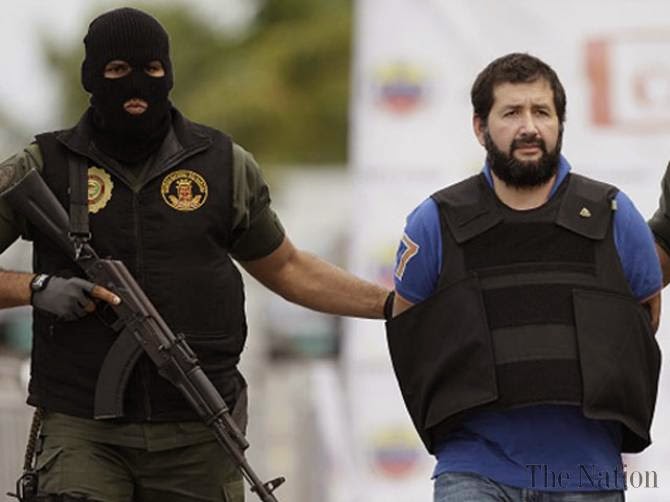
Spanish police have arrested a Colombian drug boss dubbed ‘The Mouse’, the alleged leader of a major cocaine smuggling gang accused of 400 killings, officials said on Saturday. Officers arrested the 40-year-old, whose real name is reportedly Hernan Alonso Villa, in the eastern seaside city of Alicante on Friday, according to a police statement. He is considered ‘the top leader of the military wing of the Oficina de Envigado, a Colombian criminal organisation accused of 400 killings as well as drug-trafficking, extorsion and forced displacements of Colombian citizens’, it said. ‘He is one of the criminals most wanted by the Colombian authorities. He had more than 200 people under his command and was responsible for exporting cocaine to Spain, the United States and Holland,’ the statement said. Spanish officers arrested him under a Colombian extradition warrant for charges including alleged homicide and arms offences. He was carrying 40,000 euros ($54,000) in cash when he was caught, the statement said. Authorities say the ‘Oficina’ gang dates back to the 1980s when it carried out killings for the now-dismantled Medellin Cartel. Spain is one of the main entry points for illegal narcotics into Europe and Colombia is one of the world’s biggest sources of cocaine. Colombia produced 290 tonnes of cocaine in 2013, according to the United Nations Office on Drugs and Crime.

Thursday, 17 July 2014

REVEALED: Shocking failure to police drink-spiking in Spanish resorts

POLICE in Spain have apparently no official records for the crime of drink-spiking. Hospitals and town halls have also failed to give any indication of the severity of the problem, despite a terrifying 60% increase in sexual attacks in Spanish resorts last year. The shocking revelation comes as assaults from spiking begin to soar, with the summer season now well underway. “It is clearly becoming a bigger issue and particularly in the summer,” said a source at Marbella Town Hall.

Wednesday, 16 July 2014

We cannot see our greatest selves beyond giant shame trees that provides shade for our demons of guilt

 while we sweat in the harshness of the midday sun of our hang-ups, begging to believe we are worthy.

Released Alien from Border Crisis Arrested for Alleged Murder, Kidnapping in Texas

An illegal immigrant who was released by U.S. authorities with a Notice to Appear has been arrested for the alleged murder of a woman and kidnapping of children on U.S. soil. The alleged crimes occurred after the man was released. The man, Pedro Alberto Monterroso-Navas, entered the U.S. illegally with children and turned himself in to U.S. Border Patrol agents. He was processed and released, as are all illegal immigrants who come as unaccompanied minors or incomplete family units from Central America. The alien is from Honduras. The arrest was first reported by the Associated Press (AP), but Breitbart Texas has exclusively confirmed that the man was part of the Obama Administration’s catch and release policy for family groups from Central America. A U.S. Border Patrol source who spoke with Breitbart Texas on the condition of anonymity provided Breitbart Texas with the alien registration number for the man, and the event number for the man’s apprehension. He was processed in the McAllen station of the U.S. Border Patrol. The alien’s registration number is 202027386. The event number for his apprehension is MCS14061487. The “MCS” designates the McAllen station, the “1406” designates that the man was apprehended in June of 2014. A separate Border Patrol source confirmed that the man was apprehended on June 26, 2014 with two children he claimed were his own. He told U.S. authorities he had family in Metairie, Louisiana.

Tuesday, 22 January 2013

Ms Sandiford to be executed for drug trafficking.

A British grandmother has been sentenced to death by firing squad for smuggling almost 5kg of cocaine into Bali.

Lindsay Sandiford was arrested in May last year after she tried to enter the Indonesian holiday island with illegal drugs worth £1.6 million hidden in her suitcase.

Local prosecutors had called for the 56-year-old housewife to be jailed for 15 years. But today there were gasps in the Bali courtroom when a panel of judges announced Ms Sandiford would be executed for drug trafficking.

As the shock verdict was announced, Ms Sandiford, from Gloucestershire, slumped back in her chair in tears before hiding her face with a brown sarong as she was led out of the courtroom.

Thursday, 26 July 2012

The biggest fines in British maritime history were handed down to a group of Spanish fishermen on Thursday, for illegal fishing in UK waters.


Leo blog : Romanian fishermen are cleaning up their net from small dead fish
 Photograph: Robert Ghement/EPA

Some of the biggest fines in British maritime history were handed down to a group of Spanish fishermen on Thursday, for illegal fishing in UK waters.

Two companies owned by the Vidal family were fined £1.62m in total in a Truro court, after a two-day hearing, in which details emerged of falsified log books, failing to register the transfer of fish between vessels, false readings given for weighing fish at sea, and fiddling of fishing quotas.

Judge Graham Cottle said the family were guilty of "wholesale falsification of official documentation" that amounted to a "systematic, repeated and cynical abuse of the EU fishing quota system over a period of 18 months".

He said: "[This was a] flagrant, repeated and long term abuse of regulations. The fish targeted [hake] was at that time a species of fish on the verge if collapse and adherence to quotas was seen as crucial to the survival of the species."

The Spanish fishing vessels had been sailing under UK flags and were landing fish based on quotas given to British fishermen under the EU's common fisheries policy. Two vessels were involved, but the companies own several other large vessels, capable of industrial-scale fishing.

The offending fishermen, who admitted their guilt earlier this year, were not in court to hear him, having been given leave to return to Spain last night. The offences, dating from 2009 and 2010, relate to two companies, Hijos De Vidal Bandin SA and Sealskill Limited, both owned by the Vidal family. They were fined £925,000 on a confiscation order, plus £195,000 in costs, and an additional fine of £250,000 levied on each of the two companies. Two skippers who were acting under the family's instructions were fined £5,000 each.

Ariana Densham, oceans campaigner at Greenpeace, who was present for the trial and judgement, said that the fines, while welcome, did not go far enough. "This group of people should never be allowed near UK fishing quota again," she said. "The Vidal's right to fish should be removed completely."

She said the offences showed the vulnerability of the EU's fishing quota system to fraud. "The system that allowed this to happen needs to be fixed," she said. "This case is not a one off. It's a symptom of Europe's farcical fishing rules. The Vidals were permitted to fish under UK flags, using UK quota, and receive huge EU subsidies, with none of the proceeds ever feeding back into the UK economy. The system is skewed in favour of rich, powerful, industrial-scale fishing companies, when really it should be supporting low-impact, sustainable fishermen."

There are currently moves under way in Brussels by the fisheries commissioner, Maria Damanaki, to reform the EU's common fisheries policy. The proposed reforms – which include the ending of the wasteful practice of discarding healthy and edible fish at sea – have met stiff opposition, particularly from the French and Spanish fishing industries. Spain has the biggest fishing fleet in Europe and receives the lion's share of the subsidies available for fishing within the EU. A historic agreement was reached among member states last month on the proposals, but they must now pass the European parliament, which is expected to consider the proposals later this year.

Thursday, 12 July 2012

Last week, Brescia art experts found 100 'new' works by the old master. Their value? €700m. But there's a catch: their rivals in Milan aren't convinced

1 / 2

To find one previously unknown work by one of art's undisputed geniuses may be considered good fortune. To discover 100 in one go might appear too good to be true. It should be no surprise then that last week's astonishing claims by Italian art sleuths to have found a cache of 96 paintings and sketches by the baroque giant Caravaggio in a workshop in Milan's Sforzesco Castle are facing increasing scrutiny and, in many circles, disbelief.

Art critics have expressed doubts that such a huge amount of work – almost doubling overnight the number of pictures attributed to the celebrated old master – could have gone unnoticed for so long.

And in response, authorities in Milan, no doubt miffed that art academics from the rival regional city of Brescia are claiming the glory for the discovery, are not sitting on their hands. Yesterday they announced two inquiries of their own into the veracity of the researchers' claimed methods and checks, and an independent assessment of the artworks' provenance.

Already the discovery is being tainted by serious claims and counter claims regarding dubious ethics and mysterious sorties at odd hours that could have come straight from the pages of the iconic painter's own colourful life.

The excitement began last Wednesday when a breathless Italian news agency reported the confident claims of art experts from the Brescia Museum Foundation that around 100 early works by Michelangelo Merisi, better known as Caravaggio, had been identified. An eye-watering price was soon put on them: €700m (£550m).

The cache was found, said the researchers, Maurizio Bernardelli Curuz Guerrieri and Adriana Conconi Fedrigolli, at the city's landmark castle in the old workshop of Caravaggio's master, the post-Renaissance painter Simone Peterzano. The researchers said their detailed comparison of the works with known pieces by the painter showed "the faces, bodies and scenes the young Caravaggio would use in later years".

"Caravaggio left the region of Lombardy with a rich collection of figures that he used throughout his career, but especially in his early years working in Rome. These works are proof," said Mr Bernardelli.

As The Independent reported at the time, Elena Conenna, the city council's somewhat-surprised culture spokeswoman, gave a cautious welcome to the "discovery". "We'll be very happy to discover it's true," she said. "But it's strange. They weren't in a hidden place, they were accessible to all." She said the city had not been informed about the discovery and would be "carrying out checks". Many people assumed the Brescia researchers had announced their discovery without warning to increase the impact.

Key to the Brescia pair's claims was numerous visits to the workshop during what they said was a painstaking two-year period of research into the paintings and sketches. Unfortunately, an email dated 11 May last year has now surfaced in which the pair appear to be requesting electronic copies of the works. Neither are there any official records of them having viewed the works in person, according to Francesca Rossi, the official in charge of access to the castle's art and antiquities. She told Corriere della Sera newspaper: "I've never seen them here. They've never had access to the collection, they studied the images exclusively from the computer disc."

Reports yesterday suggest the disc sent from Milan to Brescia contained over 1,700 jpeg images – at low resolution. And in a very Italian twist, authorities in Milan have also announced an internal inquiry to establish if unwarranted collusion and even corruption was involved.

Mr Bernardelli disputed the claims of the Milan officials. "We saw the collection various times, even if these were outside normal hours, accompanied by different people," he said.

Other art experts have taken issue with the pair's conclusions. One critic, Professor Philippe Daverio, said that identification of a Caravaggio's organic and ever-evolving work could not be made by looking for the presence of key "designs". "Design doesn't exist in the character of Caravaggio," he said. "And design wasn't needed in his painting. These sketches can't really be compared to anything."

Another critic, Francesca Cappelletti, who helped to establish that The Taking of Christ was painted by Caravaggio, was blunter: "To me, these pictures still seem like typical works of Peterzano." Another critic, Tomaso Montanari, said sarcastically the claim was akin to taking 100 drawings by Verrocchio (Leonardo da Vinci's master) and attributing them to the creator of the Mona Lisa.

It's perhaps not surprising that the latest controversy should centre on Caravaggio: fascination with the artist is at an all-time high. Some evidence even suggests that the artist, who added a revolutionary degree of grit and realism to the prevalent mannerist painting of his era, has even replaced Renaissance giant Michelangelo at the top of the unofficial Italian art charts.

Philip Sohm, of the University of Toronto, studied the number of publications devoted to both artists during the past 50 years, and found that since the mid-1980s the baroque painter has moved ahead of his Renaissance rival.

Interest has been increased by attempts in recent years to shed light on the mystery surrounding Caravaggio's death in 1610 at the age of 38. An investigation, involving DNA tests and comparisons with living relatives, led experts to conclude that the painter was probably buried in Porto Ercole, in Tuscany, after suffering an illness, thereby bringing centuries of speculation, including assassination theories, to an end.

Caravaggio was active in Rome, Naples, Malta and Sicily. But he often had to flee cities and leave works unfinished because of his tempestuous nature, which led him to kill at least one man. He eventually returned to Italy confident of obtaining a papal pardon, thanks to powerful connections in Rome.

Scepticism regarding the Milan paintings and sketches is in itself unlikely to harm sales of Mr Bernardelli Curuz's and Ms Adriana Fedrigolli's e-book, Young Caravaggio: One Hundred Rediscovered Works, dedicated to their claims and the pictures they are based on. But their publishing ambitions hit a snag this week with news that Amazon in Italy had withdrawn the book from sale, albeit without commenting on whether this was due to doubts over the quality of the research it contained.

Mr Curuz told Ansa: "The blocking of the Amazon system has damaged us because to understand the discovery it is essential to see the 1,000 images that we have collated."

The pair said they had no idea why it had been dropped, but added that it would be available on a website for self-published books. On his Facebook profile, Mr Curuz, was putting on a brave face. "We are calm and confident. The world will judge our work," he wrote.

But it is not only the world. It is also Milan's ever-busy prosecutors, who are looking into whether they should investigate the Brescia art historians for the illegal publication of private images.

Caravaggio: Life and legacy

Born Michelangelo Merisi, in Milan, on 29 September 1571.

Early life The family moved to nearby Caravaggio in 1576, from where the artist took his name. In 1592 he fled to Rome after a brawl.

Career Known for his rare naturalism and use of light and shade, a technique called chiaroscuro, that would influence later giants, including Rembrant. Despite lifelong fame – and notoriety – he sunk into obscurity after his mysterious death, only to be rehabilitated in the 20th century.

Expert view "He reclaimed the human form... there was art before him and art after him, and they were not the same." Robert Hughes, critic, in 1985.

Wednesday, 11 July 2012

Underground drug smuggling tunnel found in Arizona

Mexico’s army stumbled upon another secret tunnel for smuggling drugs into the United States, according to wire reports. This one is 755-feet long, dug 60 feet beneath the ground and runs across the Sonora-Arizona border. That pales in comparison with the 2,000-footers found in past years. But what it lacks in length it appears to make up for in sophistication: “It had electricity, ventilation and small cars to transport the drugs through the tunnel,” The Associated Press reported, citing a Mexican general. The find comes on the heels of the Mexican election. Enrique Peña Nieto, the presumptive president-elect, of the Institutional Revolutionary Party (PRI), has suggested Mexico may shift its drug-war policy but has offered little in the way of specifics. Would that mean, no more magic tunnel discoveries? Drug tunnels are some of the sweetest candy for fantasizing about the narcotics trade. They're portals that ultimately link American drug users up with brutal cartels that rule swaths of the Americas. One such ruler, Chapo Guzman, whom the US Treasury Department has deemed the “world’s most powerful drug trafficker,” is known to have commissioned a few of these tunnels. New Yorker magazine’s William Finnegan writes: “The story was that he built his tunnels with slave labor and, in the interests of secrecy, killed the workers when they were finished.” Late last year, ABC News reported authorities had discovered as many as 75 drug tunnels linking Mexico and the United States.

Thailand's drugs smuggling battle

For centuries the Golden Triangle - where Burma, Thailand and Laos meet - has been notorious for the production of opium and drug smuggling.

While the amount of poppies grown there has more than halved over the past decade, production of the stimulant methamphetamine has soared.

Most of it is produced in Burma, and much of it ends up in Thailand.

Monday, 9 July 2012

Dilawar Ravjani, ringleader of the £176m 'carousel fraud' VAT scam.

Dilawar Ravjani, ringleader of the £176m 'carousel fraud' VAT scam
The carousel fraudsters pretended to have sold more than 4m mobiles phones worth £1.7bn, most of which never existed.

Fifteen people have been convicted of trying to steal £176m from the public purse in one of the largest and most complex mobile phone taxfrauds yet uncovered.

The case, which has involved five separate trials and concludes on Tuesday with the sentencing of a Brussels freight company owner, came to light after investigators discovered a trail of ghost companies reselling nonexistent phones.

After a three-week investigation, officers found nearly £47,000 in cash hidden in the boot of a car belonging to John McFarnon, chairman of Unique Distribution, a well-known and partly legitimate mobile distributor.

The ringleader, Dilawar Ravjani, is to serve 17 years, the longest penalty imposed for so-called carousel fraud, after masterminding the attempt to illegally reclaim millions of pounds in VAT payments from HM Revenue & Customs (HMRC).

Investigators were alerted after they discovered the gang had been claiming to trade phones made by Sony Ericsson and Samsung which, although they had been unveiled in promotional campaigns, were not yet on sale. The gang pretended to have sold more than 4m mobiles phones worth £1.7bn, most of which never existed. It is thought a further 50 companies, some of them established distributors, may have been linked to Ravjani's scam.

A total of £170,000 in cash was found during the clampdown, codenamed Operation Inertia, including £80,000 stuffed into drawers at one of Ravjani's companies, Future Communications, which investigators believe was to be used to pay off accomplices at other companies.

"This is one of the largest carousel frauds we have done," said the HMRC criminal investigations director, Donald Toon. "The people who run these scams aren't isolated individuals. Some of them are professional major fraudsters and it's a massively international game."

One of those convicted, John Conroy, found to be a covert backer of the scam and a shadow director of Unique, was resident in Marbella in Spain. Future's finance director, Zafar Chisthi, fled to Pakistan before his trial. He was sentenced in his absence to serve 11 years and remains in hiding.

The transgressions took place over just eight months. The companies involved, based in Stanmore in Middlesex and Abingdon in Oxfordshire, hoped to siphon a maximum amount in monthly VAT repayments before tax inspectors caught up with the scam.

The false trades are believed to have begun with a ghost company based in the UK claiming to have imported thousands of phones from Belgium. Sony Ericsson had just announced its P990 handset, and the company claimed to have imported 90,000 of them. It claimed a further 96,000 Samsung Serene handsets had been brought into the UK.

But the gang had failed to spot a manufacturing delay that meant neither model had left the production line at the time. The phones passed through other "buffer" firms, before being bought by Future.

A chain of five or six ghost companies was created to muddy the waters. More than 5,700 individual trades were recorded, some taking just a day to pass through the entire chain. Future, at the end of the chain, would then claim to have sold the phones to a ghost company in Europe.

Because companies cannot claim the cost of VAT payments back from their European counterparts, the UK tax authorities reimburse VAT on any items bought in the UK but sold abroad. This is done in order to encourage exports.

However, following a clampdown on VAT repayments where the first company in the chain has gone missing, Future was unable to make its false claims and forced to change tack. It then began importing the phones itself, and selling them on to its sister company Unique and as many as 50 other distributors, both real and shell companies. Unique would then sell the phones to a European company and claim the tax back.

The scam also involved two freight companies, A1 Freight in Staffordshire and Boston Freight in Belgium. Vans shuttled across the channel, generating documents to prove goods had crossed borders.

When investigators raided Boston Freight, they found three vans loaded with pallets of phones, but the handsets in questions were low-value devices, which they believe may have been dummy cargoes designed to throw customs off the scent. The high-end Sony and Samsung devices shown on the paperwork were never found.

Three successful VAT repayment claims were made from November 2005 to June 2006, totalling £107m, before the fraud was stopped. The money, which officers are attempting to claw back, was laundered through offshore bank accounts, property and car companies. Future had attempted to claim a total of £176m.

Investigators' suspicions were confirmed when they discovered Unique had, during the eight months in question, declared eye-catchingly large sales of £2.2bn but paid a total of £17.74 in VAT.

When Unique's offices were raided, they found a majority of staff working on low value but legitimate trades such as reselling airtime, while a small team were employed generating the bulk of the company's income from the carousel fraud.

"This was theft from the taxpayer," said Toon. "It fundamentally undermines the UK tax base and that's why the enforcement response is so critical."

Marshall Boston of Boston Freight is due to be sentenced at Kingston crown court on Tuesday .

GODFATHER George 'The Penguin' Mitchell has become the African link man in a cocaine chain from Bolivia to the streets of Ireland and Europe.

Crime kingpin Mitchell is Moroccan link man in massive drug deals with Bolivian cocaine cartels


AFRICAN KING: George ‘The Penguin’ Mitchell brings drugs in through Africa


AFRICAN KING: George ‘The Penguin’ Mitchell brings drugs in through Africa

GODFATHER George 'The Penguin' Mitchell has become the African link man in a cocaine chain from Bolivia to the streets of Ireland and Europe. The crime lord is sourcing massive shipments of cocaine, similar in quantity to the massive one seized by gardai this week, directly from a Bolivian cartel, gardai believe.


Mitchell (61) is believed to be organising the deals from a new base in Morocco, where he has spent the majority of his time in recent years after leaving a property in Amsterdam. Gardai believe the cocaine ending up in Ireland is now sourced from Bolivia by Irish criminals.

Mitchell - who is suffering from health problems as a result of heavy drinking - has been living in a plush villa in ex-pat community in the north African country for the last two years. Last year, the heavily-fortified house where Mitchell had been living in Amsterdam, in de Watermolen 7, was placed on the rental market.

It is believed that The Penguin - who earned his nickname as a result of his waddling, awkward gait - shared the home with his Indonesian mistress and business partner.

Mistress

However, records show that a new mortgage for €450,000 was taken out on the house in 2010 in the name of a 33 year old Irish man. The Penguin is also involved in a legitimate business with his mistress, importing furniture from South East Asia.

A source has claimed that Mitchell even recently made an appearance on a trade stand promoting Indonesian furniture imports and crafts at a prestigious art, furniture and food fair in The Hague. It is believed that The Penguin regularly returns to Amsterdam to visit his family which is based in the country.


DEAD: Derek Dunne with his wife


DEAD: Derek Dunne with his wife

Mitchell's daughter, Rachel, has also spent time with her father in Morocco, after moves between Marbella and Amsterdam. In June 2000, Rachel's partner - heroin dealer Derek 'Maradona' Dunne' - was gunned down outside the home she shared with her father in Amsterdam. Dunne (33) was a former League of Ireland player who became a major player in Dublin's heroin trade.


A source said that the blow Gardai delivered to cocaine import routes last week will be a major headache for Mitchell's crime organisation. Detectives from the Garda National Drugs Unit recovered a staggering 440 kilos of cocaine following a ten-day operation on Tuesday. The drugs were imported to Ireland in a container disguised as wooden flooring.

Two men were charged in connection with the seizure - the largest ever on land in the history of the state.

"Cocaine has been directly traced to Bolivia and came through west Africa and then into Europe. The drugs were then shipped into Ireland from a port in Europe," a source revealed.

Mitchell is described as a link man and a facilitator in the international drug trafficking trade who works with other investors from Ireland and the UK who stump up cash for major deals.

Shipments


DEALING: Mitchell used public telephone boxes


DEALING: Mitchell used public telephone boxes

Mitchell has extensive contacts and regularly organises shipments of drugs into England, from where one of his main business partners in Liverpool sends them forward into Ireland. He is extremely careful and prefers to use public telephones when doing business.


A Dutch security source said Mitchell is placed under surveillance whenever he returns to Holland and that he is aware of this and doesn't even litter the street to avoid drawing unwanted police attention.

"Some top Dutch gangsters are close to British and Irish criminals and they like doing business with them, having a drink and the odd bit of socialising together.

"They know each other and help one another out."

After Derek Dunne was killed, Rachel moved into a house on Groote Peel in Amsterdam with her two kids. The house is also listed as a business address for a wholesale jewellery company, registered with the KvK (chamber of commerce) by her brother, George jnr. Mitchell's other son, Paul, also lives in Holland.

Mitchell, originally from Ballyfermot, has spent the last 25 years flooding Ireland with cocaine, heroin, cannabis and weapons. He started his involvement in serious crime with murdered gangland boss, Martin 'The General' Cahill, and took part in a number of robberies before he was jailed for five years in 1988 for stealing a big consignment of cattle drench.

After his release from prison, Mitchell was one of a number of big-time Dublin criminals who realised the vast fortunes which were to be made from drug trafficking. He set up a well-organised racket from his west Dublin base and quietly began to establish himself as the biggest cannabis and ecstasy trafficker in the State.

But the multi-millionaire criminal fled Ireland following the murder of crime reporter Veronica Guerin 1996 after gardai turned up the heat on drug traffickers. He moved his base to Holland after the arrest of his right-hand man Johnny Doran who was caught with £500,000 worth of cannabis on the M50 at Castleknock, Dublin.

Broker


PAL: Johnny Doran


PAL: Johnny Doran

Mitchell quickly struck up close ties with Middle Eastern and South American drug-trafficking gangs. He became one of the key suppliers for cannabis, cocaine and ecstasy into the British and Irish markets. The Penguin is also a key broker for other gangs operating in Ireland, Britain and Europe.


Apart from drug trafficking, Mitchell and his associates are involved in illegal firearms trading, prostitution and money laundering. In March 1998, he was arrested by Dutch police and charged with a £5m computer supplies robbery. During his court appearances in Holland, Mitchell described himself as a respectable businessman involved in import-export. He was sentenced to three years imprisonment by Dutch judges for the computer parts robbery.

However, he walked free a year later in 1999 due to lenient sentencing regulations, with a third of his term automatically remitted for good behaviour and the time in pre-trial custody also deducted.

One of his associates - who was sentenced to 16 months in prison for the same offence - was Mitchell's pal, notorious Dutch drugs baron Johan Bolung. The flamboyant Dutchman who drives fast top of the range cars and wears exclusive watches has been a close associate of Mitchell and other leading Irish drugs traffickers for many years. He is known to have extensive drugs dealings with Moroccan and also Turkish criminals.

When Mitchell arrived in Holland in 1996 he stayed for a while in Bolung's luxury apartment in one of the wealthiest suburbs south of The Hague. Despite The Penguin's lifelong involvement in criminality, some of his relatives are highly respected members of Irish
society.

Furious

Last year, Fine Gael Presidential candidate Gay Mitchell was furious after he was quizzed about the Penguin, his first cousin, on RTE Radio.

"I am the first cousin of an ambassador," he claimed.

"I am the first cousin of people who have been involved in security forces of the State. I have cousins who play international rugby for Ireland, none of them have anything to do with me."

Monday, 2 July 2012

Beware of missed call to check SIM cloning

Next time if you get a missed call starting with +92; #90 or #09, don't show the courtesy of calling back because chances are it would lead to your SIM card being cloned. The telecom service providers are now issuing alerts to subscribers —particularly about the series mentioned above as the moment one press the call button after dialing the above number, someone at the other end will get your phone and SIM card cloned. According to reports, more than one lakh subscribers have fallen prey to this new telecom terror attack as the frequency of such calls continues to grow. Intelligence agencies have reportedly confirmed to the service providers particularly in UP West telecom division that such a racket is not only under way but the menace is growing fast. "We are sure there must be some more similar combinations that the miscreants are using to clone the handsets and all the information stored in them," an intelligence officer told TOI. General Manager (GM) BSNL, RV Verma, said the department had already issued alerts to all the broadband subscribers and now alert SMSes were being issued to other subscribers as well. As per Rakshit Tandon, an IT expert who also teaches at the police academy (UP), the crooks can use other combination of numbers as well while making a call. "It is better not to respond to calls received from unusual calling numbers," says Tandon. "At the same time one should avoid storing specifics of their bank account, ATM/ Credit/Debit card numbers and passwords in their phone memory because if one falls a prey to such crooks then the moment your cell phone or sim are cloned, the data will be available to the crooks who can withdraw amount from your bank accounts as well," warns Punit Misra; an IT expert who also owns a consultancy in Lucknow. The menace that threatens to steal the subscriber's information stored in the phone or external memory (sim, memory & data cards) has a very scary side as well. Once cloned, the culprits can well use the cloned copy to make calls to any number they wish to. This exposes the subscribers to the threat of their connection being used for terror calls. Though it will be established during the course of investigations that the cellphone has been cloned and misused elsewhere, it is sure to land the subscriber under quite some pressure till the time the fact about his or her phone being cloned and misused is established, intelligence sources said. "It usually starts with a miss call from a number starting with + 92. The moment the subscriber calls back on the miss call, his or her cell phone is cloned. In case the subscribers takes the call before it is dropped as a miss call then the caller on the other end poses as a call center executive checking the connectivity and call flow of the particular service provider. The caller then asks the subscriber to press # 09 or # 90 call back on his number to establish that the connectivity to the subscriber was seamless," says a victim who reported the matter to the BSNL office at Moradabad last week. "The moment I redialed the caller number, my account balance lost a sum of money. Thereafter, in the three days that followed every time I got my cell phone recharged, the balance would be reduced to single digits within the next few minutes," she told the BSNL officials.

France brings in breathalyser law

New motoring laws have come into force in France making it compulsory for drivers to carry breathalyser kits in their vehicles. As of July 1, motorists and motorcyclists will face an on-the-spot fine unless they travel with two single-use devices as part of a government drive to reduce the number of drink-drive related deaths. The new regulations, which excludes mopeds, will be fully enforced and include foreigner drivers from November 1 following a four-month grace period. Anyone failing to produce a breathalyser after that date will receive an 11 euro fine. French police have warned they will be carrying out random checks on drivers crossing into France via ferries and through the Channel Tunnel to enforce the new rules. Retailers in the UK have reported a massive rise in breathalyser sales as British drivers travelling across the Channel ensure they do not fall foul of the new legislation. Car accessory retailer Halfords said it is selling one kit every minute of the day and has rushed extra stock into stores to cope with the unprecedented demand. Six out of 10 Britons travelling to France are not aware they have to carry two NF approved breathalysers at all times, according to the company. The French government hopes to save around 500 lives a year by introducing the new laws, which will encourage drivers who suspect they may be over the limit to test themselves with the kits. The French drink-driving limit is 50mg of alcohol in 100ml of blood - substantially less than the UK limit of 80mg.

Sunday, 1 July 2012

The number of Britons arrested overseas is on the rise, official figures have shown.

 The Foreign Office (FO) handled 6,015 arrest cases involving British nationals abroad between April 2011 and March 2012. This was 6% more than in the previous 12 months and included a 2% rise in drug arrests. The figures, which include holidaymakers and Britons resident overseas, showed the highest number of arrests and detentions was in Spain (1,909) followed by the USA (1,305). Spanish arrests rose 9% in 2011/12, while the United States was up 3%. The most arrests of Britons for drugs was in the US (147), followed by Spain (141). The highest percentage of arrests for drugs in 2011/12 was in Peru where there were only 17 arrests in total, although 15 were for drugs. The FO said anecdotal evidence from embassies and consulates overseas suggested many incidents were alcohol-fuelled, particularly in popular holiday destinations such as the Canary Islands, mainland Spain, the Balearics (which include Majorca and Ibiza), Malta and Cyprus. Consular Affairs Minister Jeremy Browne said: "It is important that people understand that taking risks abroad can land them on the wrong side of the law. "The punishments can be very severe, with tougher prison conditions than in the UK. While we will work hard to try and ensure the safety of British nationals abroad, we cannot interfere in another country's legal system. "We find that many people are shocked to discover that the Foreign and Commonwealth Office cannot get them out of jail. We always provide consular support to British nationals in difficulty overseas. However, having a British passport does not make you immune to foreign laws and will not get you special treatment in prison."

Related Posts Plugin for WordPress, Blogger...